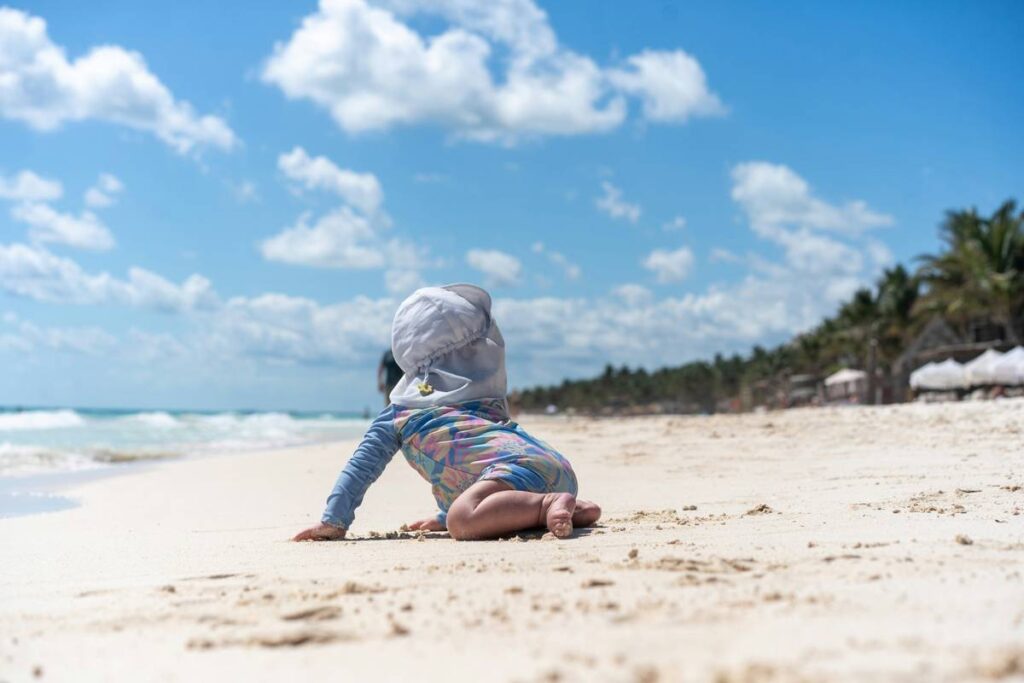
Delicate skin burns faster—and heals slower. Most “baby” sunscreens on shelves? They’re marketing tricks wrapped in mineral glitter. Harsh preservatives, sketchy fragrances, and nanoparticle zinc oxide hide behind cute packaging. The result? Redness, stinging eyes, or worse—long-term barrier damage. Here’s the fix: a truly most gentle baby sunscreen that shields without compromising.
Why Most “Baby-Safe” Sunscreens Fail Miserably
Manufacturers play fast and loose with “gentle” claims. Just because it says “pediatrician-tested” doesn’t mean it passed real-world stress tests on newborn epidermis. And mineral-only formulas? Not automatically safe. Many use nano-sized titanium dioxide that penetrates immature skin layers—especially when combined with emulsifiers like PEG compounds.
Think about it: your baby’s stratum corneum is 30% thinner than yours. Their pH hovers near neutral—not acidic like adult skin—making them vulnerable to alkaline irritants common in mass-market lotions. Slap on a standard tube labeled “SPF 50 for babies,” and you might be adding allergens instead of armor.
How to Choose & Use the most gentle baby sunscreen (Without Wasting Money)
It’s not just about SPF number. It’s formulation integrity, ethical sourcing, and how the product behaves under UV stress—not just in a lab, but on a wriggling infant at the beach.
Non-Nano Zinc Oxide Is Non-Negotiable
Only non-nano particles stay on the skin’s surface. They reflect UV like tiny mirrors—no absorption, no systemic risk. Look for certifications: EWG Verified, COSMOS Organic, or NSF/ANSI 305. If the label doesn’t specify “non-nano,” assume it isn’t.
Avoid These 5 Silent Irritants
Fragrance (even “natural” essential oils), alcohol denat, parabens, phenoxyethanol over 1%, and oxybenzone derivatives. One drop of lavender oil may seem harmless—but infant skin lacks mature detox enzymes. It’s not “natural = safe.” It’s chemistry + context.
Apply Like a Pro—Not a Panic-Button Parent
Less is not more. You need a full **quarter teaspoon** just for your baby’s face. Reapply every 80 minutes in water or sweat—even if the label claims “water resistance.” And never spray directly on their face. Pump onto your palm first. Always.
| Feature | Generic “Baby” Sunscreen | Truly Gentle Formula |
|---|---|---|
| Zinc Type | Nano or unspecified | Non-nano, uncoated |
| Fragrance | “Natural” blends or masking agents | Fragrance-free (zero EO) |
| Preservatives | Phenoxyethanol >1%, parabens | Radish root ferment, ethylhexylglycerin |
| pH Level | 7.5–9.0 | 5.2–6.0 (skin-compatible) |
| Cost per Ounce | $1.20–$2.00 | $3.50–$5.00 |
The Industry Secret: “Water Resistance” Is Mostly Theater
Here’s what brands won’t tell you: FDA allows “water-resistant” claims based on 40–80 minute immersion tests—but those are done on dry, intact adult skin. Babies sweat differently. Their sebum production is nearly zero. A formula that clings to your arm may slide right off your 6-month-old in humid heat.
And this? Most “reef-safe” labels are meaningless. True eco-gentleness means no coating agents on zinc—like dimethicone or stearic acid—that persist in marine ecosystems. At Emet Life Korea, we strip coatings entirely. It makes the texture slightly chalkier. But safety beats aesthetics when protecting a child’s future.
FAQ
What age can babies start using sunscreen?
After 6 months. Before that, rely on UPF clothing, shade, and timing. But once they hit half a year, choose a most gentle baby sunscreen with non-nano zinc oxide—nothing else.
Can baby sunscreen cause eczema flare-ups?
Absolutely—if it contains fragrance, alcohol, or harsh emulsifiers. Mineral-based, hypoallergenic formulas with ceramides actually help reinforce the moisture barrier during sun exposure.
Is higher SPF always better for babies?
No. SPF 50 blocks 98% of UVB; SPF 100 blocks 99%. Diminishing returns. More critical: broad-spectrum UVA/UVB coverage, proper application, and frequent reapplication. Don’t chase numbers—chase coverage.